 by Sunshade Properties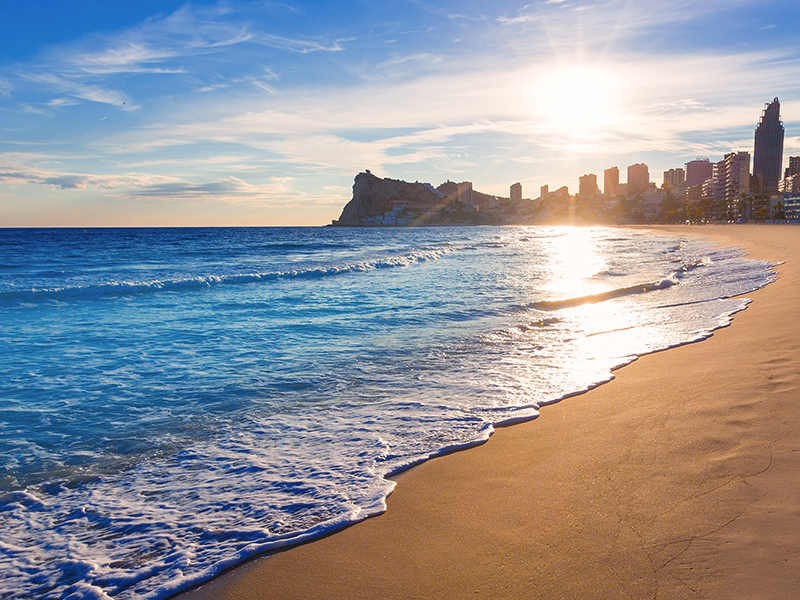
When it comes to safe, clean, and eco-responsible beaches Spain leads the world — and the Costa Blanca proudly carries that torch.
With more than 90 blue flag beaches across Alicante province, this stretch of Mediterranean coastline stands out as one of the most awarded in Europe.
In this guide, we’ll break down what Blue Flag beaches actually mean, where to find them on the Costa Blanca, and why they matter — whether you’re visiting, relocating, or just searching for the perfect spot to enjoy the sea.
The Blue Flag is an international certification awarded by the Foundation For Environmental Education.
To earn a Blue Flag, a beach must meet strict criteria across four key categories:
Water Quality – Regular testing ensures consistently clean and safe water for swimming Environmental Management – Proper waste handling, recycling bins, and eco-awareness signage Safety & Services – Lifeguards, accessible walkways, toilets, and first aid equipment Environmental Education – Information boards, eco campaigns, and activities promoting sustainability
Spain is the No1 country in the world for Blue Flag beaches — and has held that position for years. In 2024 alone, Spain was awarded a total of 747 Blue Flags.
Here are just a few of the many Costa Blanca beaches that currently hold a Blue Flag status:
Playa Del Albir (L’Alfàs del Pi): Pebbled, crystal-clear, and calm — one of the most reliable Blue Flag beaches year after year.
El Portet (Moraira): Small, scenic, and perfect for paddleboarding and families.
Playa del Postiguet (Alicante): Urban beach vibes with excellent facilities and accessibility.
Playa de Levante (Benidorm): Bustling and vibrant, but consistently well-maintained and equipped.
Cala Fustera (Benissa): Small, charming cove with turquoise water
Playa del Arenal (Jávea): Wide sandy beach ideal for families
Playa La Fossa (Calpe): Popular beach near the Peñón de Ifach
Playa del Cura (Torrevieja): Accessible and central with vibrant energy
Mil Palmeras (Orihuela Costa): Long stretch with white sand and a family vibe
Many of these towns have multiple Blue Flag Beaches, so it’s worth exploring more than one.
For locals and tourists alike, Blue Flag beaches offer peace of mind. Here’s why they’re worth seeking out:
Consistently clean and safe waters, ideal for activities like snorkeling and swimming
Well-maintained facilities like showers, toilets, and disabled access
Lifeguards during high season
Environmentally managed with recycling, signage, and wildlife protection
Family-friendly with areas for kids, calm water, and shaded spots
Many Blue Flag beaches also run eco-education activities during summer, making them not just a great place to relax, but to learn about local marine life and sustainability efforts too.
Whether you’re exploring the north of the Costa Blanca or heading down to the southern stretches, checking for the Blue Flag is a simple way to guarantee a quality beach experience.
Want to find out more ? Contact your local legal and API registered Sunshade Properties team, we speak Swedish, Danish, Norwegian, Spanish and English and cover the whole of the Costa Blanca North including Alicante, Benidorm, Finestrat, Albir, Altea, Calpe, Benissa, Moraira, Javea, Denia and surrounding areas. plus surrounding areas. www.sunshadeproperties.com Email [email protected] Call 0034 711 064 366