 by Sunshade Properties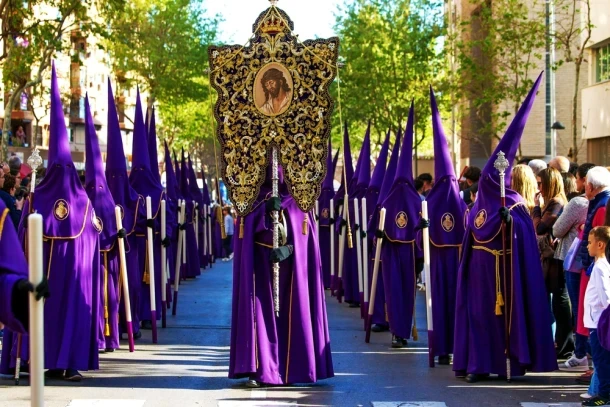
Semana Santa
The Easter period in Spain is known as Semana Santa, or Holy Week, and events in many cities around the country really do last a whole week. Here it’s not just about Easter Sunday – there are many other traditions leading up to the day, which are perhaps even more important. Many Spanish also take this week as holiday, either to go back home and visit family or visit someplace new. You’ll also find that many smaller, family businesses are closed during this week.
Religious processions
The religious processions are the main part of Semana Santa. These go on all week and consist of many people parading through the streets in colourful costumes, carrying huge floats, and mourning the death of Christ. Brass bands and drummers are also in accompaniment. Some of the best and most elaborate religious processions can be seen in the Andalusian cities of Seville and Granada, as well as further north in the Castilla y León cities of Zamora, Salamance and valladolid.
Floats
The floats are an important part of the religious process. They are huge, intricate and elaborate pieces of artwork, which feature statues of the Virgin Mary, Jesus on the cross and important events such as The Last Supper. During many of the processions, the floats are carried on the heads of men and women who hide underneath them.
Religious brotherhoods
During the parades you’ll see many religious brotherhoods, dressed in colourful silky costumes with pointed hoods, covering their heads and faces. The costumes of these religious brotherhoods may remind visitors of certain groups, which were around in the southern United States, particularly during the 1950s and 60s, but there’s nothing sinister about these costumes – they are simply historic and symbolise the brotherhoods they represent.
Mourners
Another part of the processions are the mourners. Dressed all in black, they are usually women, wearing lacy veils and carrying candles. They symbolise the mourning of the death of Christ and usually follow the brotherhoods and floats.
Want to find out more ? Contact your local legal and API registered Sunshade Properties team, we speak Swedish, Danish, Norwegian, Spanish and English and cover the whole of the Costa Blanca North including Alicante, Benidorm, Finestrat, Albir, Altea, Calpe, Benissa, Moraira, Javea, Denia and surrounding areas. plus surrounding areas.
www.sunshadeproperties.com Email [email protected] Call 0034 711 064 366